
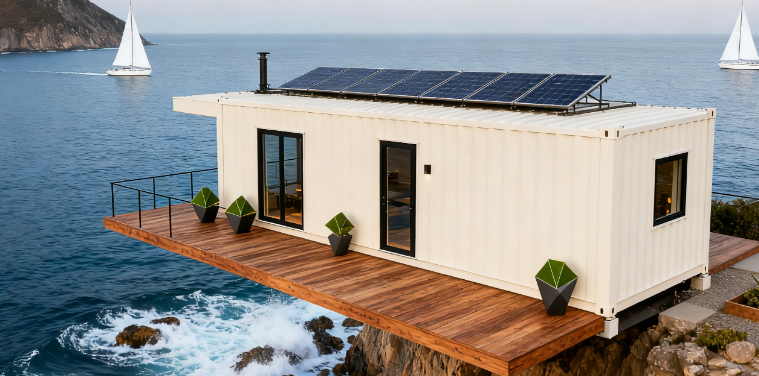
Amid the surging global demand for infrastructure and cross-border projects, Overseas Modular Container Homes have become the preferred choice for international engineering firms, developers, and government procurement. This prefabricated building form based on shipping containers, with core advantages of “rapid deployment, cost control, and low-carbon compliance,” perfectly adapts to complex overseas scenarios—from mining camps and construction dormitories to emergency shelters and commercial supporting facilities, fully meeting B2B clients’ bulk procurement and customization needs. Focusing on practical application value in foreign trade, this article provides actionable guidance for overseas project decisions, covering market opportunities, core advantages, implementation key points, and successful cases.
1. Market Opportunities: Explosive Growth in Global B2B Demand
The global container construction market is experiencing structural growth, with a projected size of $1.861 billion in 2025 and expected to exceed $2.424 billion by 2032, at a CAGR of 3.85%. Among them, B2B procurement accounts for over 72% of the market share, with core demand concentrated in three areas:
Emerging Market Infrastructure: Industrial zone construction and urban renewal projects in Southeast Asia (Vietnam, Indonesia) and the Middle East (Saudi Arabia, UAE) drive bulk procurement of construction dormitories and temporary offices;
Professional Scenario Supporting: Remote camp demand in the global mining and oil & gas industries, with single project orders often ranging from 50 to 500 units;
Emergency & Public Projects: Humanitarian aid from the UN and post-disaster reconstruction projects in various countries, with stable demand for rapidly deployable container homes.
Behind this growth is B2B clients’ dual demand for “cost reduction & efficiency improvement” and “sustainable compliance”—container homes precisely address the core pain points of overseas projects: tight construction schedules, high costs, and complex compliance requirements.
2. Core Advantages: Targeting Key Needs of B2B Overseas Projects
1. Dual Optimization of Cost and Construction Period
Prefabricated modular production reduces on-site construction time by over 50%, advancing the average ROI cycle of overseas projects by 6-12 months;
Single-unit cost is 30%-40% lower than traditional buildings, with bulk procurement (MOQ ≥ 10 units) unlocking further supply chain discounts;
Flat-pack design reduces sea freight costs by 30%, particularly suitable for cross-border long-distance transportation.
2. Flexible Adaptability and High Durability
Supports customization of 20ft/40ft standard containers, expandable containers, folding containers, etc., meeting diverse scenarios such as dormitories, offices, and medical stations;
Steel structure can withstand magnitude 8 earthquakes and category 12 typhoons, adapting to extreme overseas climates (high temperature, heavy rain, sandstorms);
Detachable and reusable features support secondary utilization after project completion, reducing asset idleness risks.
3. Green Compliance and ESG Value
Single container home recycles 3.5 tons of steel and reduces 8 tons of carbon emissions, easily meeting green building certifications such as EU CE and US LEED;
Complies with international building codes (EN 12079, ANSI), directly docking with compliance requirements of overseas government projects and multinational enterprises;
ESG attributes serve as a bonus point in bids, helping clients secure overseas orders oriented towards environmental protection.
3. Key to B2B Project Implementation: Compliance, Adaptability, and Supply Chain
1. Prioritize Local Compliance
EU Market: CE certification required (EN 1363 fire safety standard, EN 14015 structural safety standard), with local building permit filing required in some countries;
North American Market: Complies with ANSI building codes, focusing on thermal insulation performance (R-Value ≥ 13) and seismic rating;
Emerging Markets: Connect with local engineering firms in advance to understand zoning requirements (e.g., permanent building use restrictions in some Southeast Asian regions).
2. Product Localization Adaptation
Climate Adaptation: Enhanced thermal insulation and ventilation (double-layer insulation of rock wool + polyurethane) in tropical regions; additional floor heating interfaces and sealing design in cold zones;
Functional Customization: Mining camps need integrated bathroom and canteen modules; emergency projects prioritize lightweight, quick-assembly models;
Supporting Services: Provide English installation manuals and video guides, supporting on-site technical training overseas (local construction teams can be deployed for key projects).
3. Cross-Border Supply Chain Management
Procurement Planning: Lock in long-term container suppliers to avoid sea freight price fluctuations and geopolitical risks;
Logistics Optimization: Select assembly bases near target markets (e.g., Southeast Asia for ASEAN, Europe for EU) to reduce tariff costs;
Delivery Guarantee: Reserve 20% buffer inventory to meet emergency replenishment needs of overseas projects.
4. B2B Success Cases: From Bulk Orders to Benchmark Projects
1. Indonesian Mining Camp Project
Provided 300 sets of modular container dormitories for a multinational mining company, integrating solar power supply, centralized bathrooms, and canteen modules to accommodate 2,000 workers. Through local assembly in Southeast Asia, 40% import tariffs were avoided, and the project was delivered in only 90 days from order placement, saving 60% of the construction period compared to traditional buildings.
2. EU Post-Disaster Resettlement Project
Supplied 150 sets of emergency container homes for earthquake-stricken areas in Greece and Turkey, complying with CE certification and UNHCR humanitarian standards. Equipped with quick-assembly systems (single person can complete one unit in 30 minutes), waterproof insulation layers, and independent bathrooms, becoming a long-term supplier for EU emergency procurement.
3. Middle East Commercial Supporting Project
Customized 50 sets of container retail kiosks and office spaces for a free trade zone in Dubai, adopting expandable design (single container expanded to 30㎡ space), integrating local architectural aesthetics, and balancing sandstorm resistance and air conditioning energy efficiency. The project’s ROI increased by 25%.
5. Future Trends: Technological Upgrades and Market Sinking
Intelligent Integration: Integrate BIM design and smart home systems (remote energy monitoring, security) to enhance competitiveness in high-end projects;
Material Innovation: Application of environmentally friendly coatings (anti-corrosion, antibacterial) and lightweight insulation materials to reduce maintenance costs;
Market Sinking: Infrastructure boom in emerging markets such as Latin America and Africa will become a new engine for B2B order growth;
Service Model Upgrade: Launch one-stop solutions of “product + installation + operation and maintenance” to improve customer stickiness and order average value.
Conclusion
The core value of overseas modular container homes lies in providing B2B clients with “compliant, cost-optimal, and rapidly deployable” overseas building solutions. Whether it’s bulk procurement for mining camps, government emergency resettlement projects, or customized commercial supporting facilities, their modular and sustainable characteristics can accurately match the core needs of cross-border engineering.
For foreign trade enterprises, grasping the three key points of “local compliance, product adaptation, and supply chain optimization” can leverage the incremental orders in the global B2B market. Now is the golden period for layout—with the continuous growth of overseas infrastructure and ESG demand, container homes will become a core growth driver in cross-border engineering trade.
If you need to customize product plans, compliance lists, or quotation templates for specific markets (such as Southeast Asia or Europe), feel free to communicate for refinement to help quickly secure overseas B2B orders.
Click here to get your exclusive overseas container solution.
Post time: Nov-25-2025


