

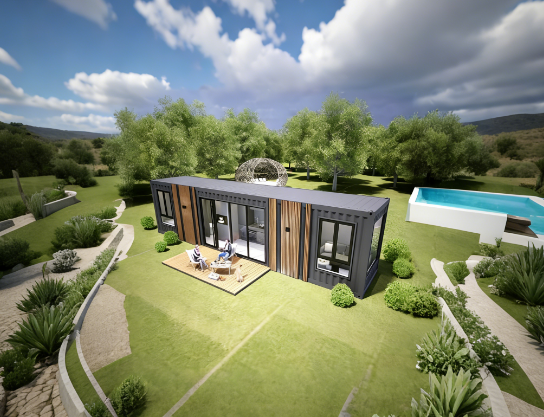
Dear Decision-Maker,
Is there a cost item on your P&L statement labeled a “necessary evil”—those temporary warehouses, site offices, emergency stations, or pop-up stores? They are indispensable yet difficult to manage, costly, and inefficient.
Today, we present to you not just another product, but a clear financial and operational decision. Take one minute to examine the following two scenarios. Which one aligns more with your current reality?
|
Scenario |
Traditional Approach (Your Present?) |
Folding Box Solution (Your Future) |
| Emergency Project Launch | Waiting for modular building production and shipping, taking 3 weeks, causing project delays and missed market opportunities. | Direct deployment from existing Folding Box inventory, shipped within 24 hours, operational within 1 hour of arrival, launching the project on schedule. |
| Cross-border Equipment Transport | Shipping four empty 40ft containers, paying premium freight for “air,” leading to uncontrollable logistics costs. | Shipping 4 Folding Box units in folded state, with a volume equal to just one standard container, immediately reducing single-shipment ocean freight costs by 75%. |
| Asset Idle Period Management | Post-project, expensive temporary structures gather dust in warehouses, incurring storage fees and continuous depreciation. | Post-project, the Folding Box is folded immediately and redeployed to the next project or returned to the leasing pool, achieving zero asset idle time. |
If the scenarios on the right reveal potential to you, then you have identified the efficiency gaps in your current operations. This article will now provide a detailed breakdown of how the Folding Box, as a systemic solution, precisely plugs these gaps and transforms “space” into your strategic advantage.
—
Part 1: Cost Deconstruction—Why Should Every Dollar You Pay Generate Maximum Returns?
Pain Point 1: The Hidden Logistics Tax—“Shipping Air”
During return trips or when transporting equipment one-way, over 75% of the interior space of traditional containers is empty. You are essentially paying international freight rates for “air.”
The Folding Box Solution:
A standard 40-foot Folding Box, when folded, reduces its height to just one-fourth of its deployed state. This means you can stack up to 4 folded Folding Box units in the same single container ship slot or on a single truck bed.
Specific Calculation: Assume the ocean freight cost for a single container from Shanghai to Rotterdam is $2,000. Transporting 4 traditional empty containers would cost $8,000. Transporting 4 Folding Box units requires only 1 slot, costing approximately $2,000—directly saving $6,000 on a single voyage. For businesses frequently redeploying assets, annual savings can reach hundreds of thousands of dollars.
Pain Point 2: Slow Deployment Speed—Time is Leaking Cash Flow
On-site construction or assembly of temporary buildings involves multiple stages like foundation work, crane lifting, wiring, and interior fitting, taking days to weeks. Each day of delay means postponed project revenue and idle team resources.
The Folding Box Solution:
The Folding Box utilizes a patented all-steel hinge system and pre-integrated utility modules. Its deployment process is streamlined to the extreme:
1. Unload the folded unit from the truck.
2. Use a forklift or built-in hydraulic legs to deploy the box. This core step takes only about 10-15 minutes.
3. Connect the pre-integrated standard power and water interfaces (if required).
4. The unit is ready for operation.
The entire process can typically be completed within 1 hour, truly achieving “ready upon arrival.”
Pain Point 3: Inflexible Assets—Unable to Match Dynamic Business Needs
Purchased traditional temporary buildings have fixed functions and locations. When business needs change, they are either disposed of at a low price or become idle burdens, resulting in very low return on assets.
The Folding Box Solution:
The Folding Box is synonymous with modularity and reconfigurability.
Functional Transformation:
Through different pre-installed interior modules, the same Folding Box shell can serve as a site project manager’s office this week and, after a quick interior swap, become an equipment maintenance workshop or safety training center next week.
Scalable Size:
Multiple Folding Box units can be quickly connected via side-door connectors to form spacious, continuous areas, meeting needs ranging from a single-person guard post to a camp dining hall accommodating hundreds.
Global Asset Pool: You can deploy Folding Box units at any project site worldwide. Upon project completion, our local service network can recover, refurbish, and induct them into a leasing pool for your next project or for use by other clients, significantly enhancing asset turnover and lifecycle value.
—
Part 2: More Than a Container, It’s a Workflow Platform for Your Business
The core value of the Folding Box transcends its physical form. It serves as a standardized, intelligent spatial interface that integrates seamlessly into your modern business processes.
Pre-integrated technology:
cable trays, LED lighting, air conditioning systems, data ports, and even solar panels can be integrated before leaving the factory. What you receive is a plug-and-play technological space, not a rough shell that requires complex construction.
Compliance and Safety:
Every one of our Folding Boxes is designed and certified according to the specifications of the target market (EU CE), ensuring you are free from compliance risks when deploying globally.
Full Lifecycle Management:
We offer end-to-end services from purchase, leasing, refurbishment, to final recycling. You can choose the cooperation model that best fits your cash flow, allowing you to concentrate capital on your core business.
—
Part Three: Your Roadmap for Action—How to Start the Change?
Transformation doesn’t require an all-or-nothing approach. We recommend a low-risk, high-return three-step validation path:
1.Precise Analysis:
Identify the temporary space application in your operations with the highest cost or the most pronounced efficiency bottleneck (e.g., annual storage rental, specific project camps).
2.Pilot Verification:
For that specific scenario, lease or purchase in small batches 1-2 Folding Box units. Conduct a full cost accounting comparison over a complete cycle (e.g., one project season).
3.Scale Deployment:
Based on clear pilot financial data, develop a roadmap for integrating the Folding Box into your corporate asset and logistics strategy.
We invite you to take the first step.
Please click the button below to enter our official website, where you can directly communicate with our project manager, and we will customize the design according to your needs
Or, directly schedule a 15-minute online meeting with our solution engineer. Bring a specific business scenario, and we will outline a preliminary solution framework and savings potential on the spot.
Let your next spatial need be the starting point for enhancing your competitiveness, not another cost problem.
Post time: Dec-16-2025


